News&Events

ERP for Manufacturing: Top Manufacturing Challenges an ERP Can Solve
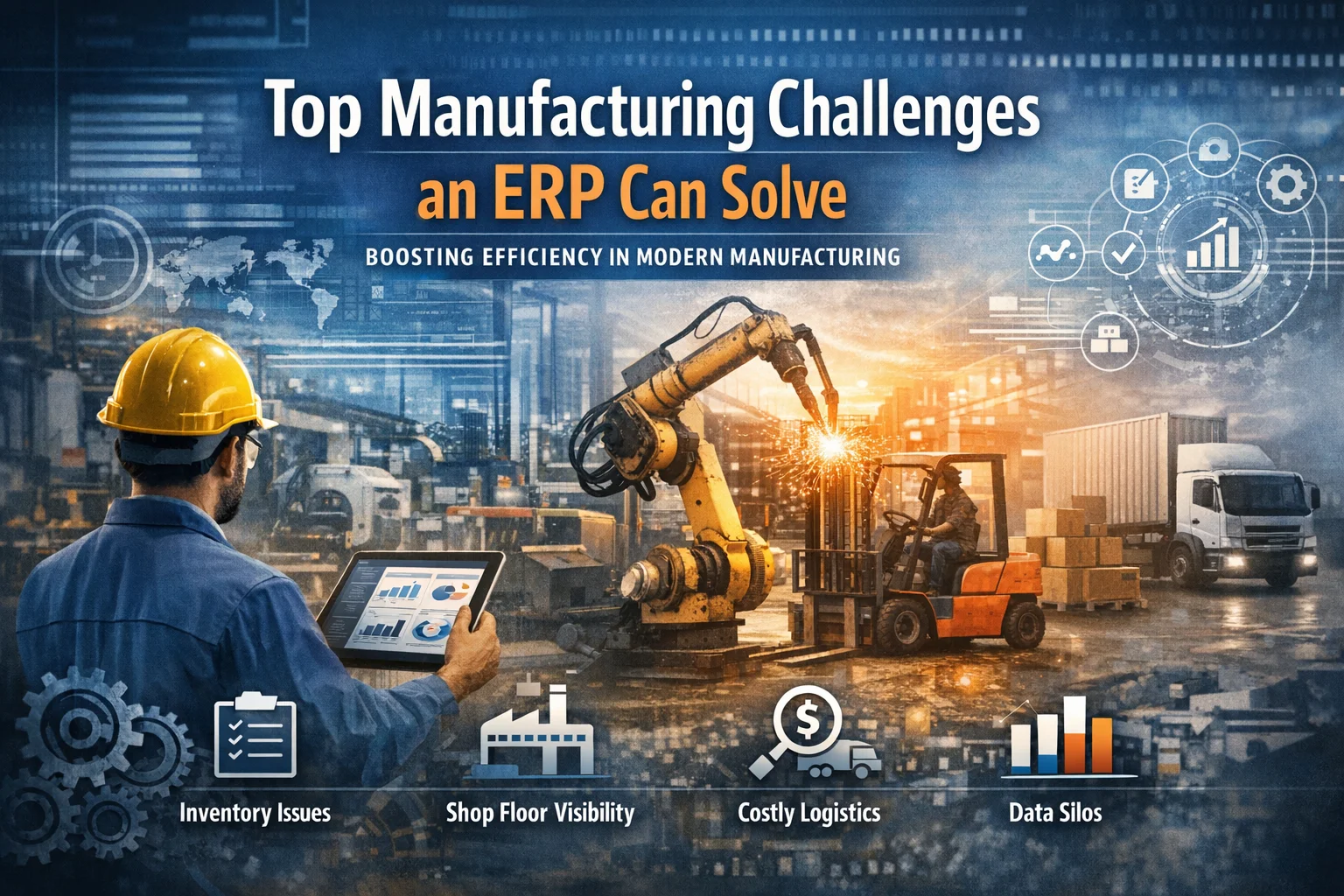
ERP for Manufacturing Companies
ERP for manufacturing companies is essential for managing production, inventory, and supply chain operations efficiently. It provides a single integrated system that connects all business processes — from shop floor operations to finance and reporting.
Unlike generic systems, a manufacturing ERP solution is designed specifically to handle production workflows, resource planning, and operational complexity. This enables manufacturers to improve efficiency, reduce costs, and scale their operations.
Introduction
Efficiency is the lifeblood of manufacturing. With tight margins and fierce competition, even small inefficiencies can mean the difference between profit and loss.
ERP for manufacturing companies provides a powerful way to improve efficiency, streamline operations, and gain full control over production processes. However, these results are only achieved when a manufacturing ERP system is implemented strategically and embraced across the organisation.
Modern ERP (Enterprise Resource Planning) systems offer a scalable and integrated solution for manufacturing businesses looking to optimise performance and stay competitive.
Why ERP Implementation Fails (and How to Succeed)
Many ERP projects stumble because they’re treated as IT initiatives rather than business transformations. Success hinges on two critical factors:
- Business-Focused Implementation: Partner with consultants who understand your business challenges, not just the technology.
- Empowered Key Users: Nominate and motivate internal “ERP pioneers” who champion the system, engage colleagues, and ensure new processes are followed.
If either of these elements is missing, the risk of failure rises dramatically.
For ERP for manufacturing implementations, aligning technology with real production workflows is essential to ensure long-term success.
The Hidden Costs of Disconnected Systems
Imagine a manufacturer using separate systems for inventory, finance, project management, and countless Excel spreadsheets. This fragmentation leads to:
- Double data entry and wasted time
- Conflicting versions of the truth
- Slow, unreliable reporting
Without a single source of data, generating accurate reports and dashboards for decision-making becomes nearly impossible.
A manufacturing ERP system eliminates these issues by creating a unified platform where all business processes are connected and data flows seamlessly across departments.
Shop Floor: From Black Box to Glass Box
The shop floor is often a mystery. Key questions go unanswered:
- How much time was spent on each production order?
- Which materials were consumed, and by whom?
- Where did that faulty batch come from?
- What’s pending, and when will it be finished?
- How are employees spending their time?
ERP for manufacturing provides real-time visibility into shop floor operations. A modern ERP’s Manufacturing Execution System (MES) module tracks every step of production, giving manufacturers complete transparency and control over processes.
Inventory & Procurement: From Guesswork to Precision
Disjointed systems make it hard to know what inventory is on hand and what needs to be ordered. This leads to:
- Overstocking or stockouts
- Last-minute, expensive purchases
- Production delays
An ERP for manufacturing system solves this with Material Resource Planning (MRP), automating inventory tracking and procurement. This ensures manufacturers can maintain optimal stock levels and avoid costly disruptions.
Logistics: Smarter Freight Decisions
Finding the best freight offer can be time-consuming. ERP systems can integrate with freight aggregators (like Machship), automating rate comparisons and booking, saving both time and money.
With a manufacturing ERP solution, logistics becomes more efficient, predictable, and fully integrated into the overall supply chain process.
Key Benefits of ERP for Manufacturing
Implementing ERP for manufacturing delivers measurable business benefits:
- Improved production efficiency
- Better inventory control and accuracy
- Real-time visibility across operations
- Reduced operational costs
- Enhanced decision-making with accurate data
- Scalable systems that grow with your business
These benefits make manufacturing ERP systems a critical investment for companies looking to stay competitive.
The Dynamic Aspect Advantage
If these pain points sound familiar, Dynamic Aspect can help. Our team brings over 200 years of combined ERP experience, led by industry expert Michael Schirshove.
What sets us apart is our holistic approach: we don’t just implement solutions — we collaborate to transform your business operations using ERP for manufacturing best practices.
We work side-by-side with your team to:
- Optimise processes
- Boost efficiency
- Drive measurable results
Our mission: help you take control of your workflows and unlock your organisation’s full potential with a modern manufacturing ERP system.
Why Choose Microsoft Dynamics 365 for Manufacturing ERP?
Microsoft Dynamics 365 is a powerful ERP for manufacturing companies, combining advanced functionality with flexibility and scalability.
With Microsoft Dynamics 365, manufacturers benefit from:
- Cloud-based access and real-time data
- Integration with Microsoft tools
- Advanced reporting and analytics
- Scalable architecture for growing businesses
This makes it an ideal manufacturing ERP solution for companies looking to modernise operations.
ERP for Manufacturing in Australia
Manufacturing businesses in Australia face increasing pressure from rising costs, supply chain disruptions, and global competition.
ERP for manufacturing in Australia helps companies improve operational efficiency, maintain compliance, and adapt to changing market conditions. A modern manufacturing ERP system allows businesses to scale, innovate, and remain competitive in a rapidly evolving industry.
Conclusion: Turning Challenges into Opportunities
Manufacturing is complex, but your systems don’t have to be.
ERP for manufacturing transforms common operational challenges into opportunities for growth by improving visibility, control, and efficiency across all processes.
With the right ERP partner and platform, you can turn inefficiencies into competitive advantages—and build a more resilient, scalable manufacturing business.
FAQs
What is ERP for manufacturing?
What ERP system is best for manufacturing companies?
How does ERP improve production efficiency?
How long does ERP implementation take?

Written by Michael Schirshove
Contact@dynamicaspectpartners.com.auJanuary 15, 2026